Nobody intervened — they just filmed as they nearly came to blows
When the argument explodes in the office: two colleagues, a room full of phones, and no one steps in.
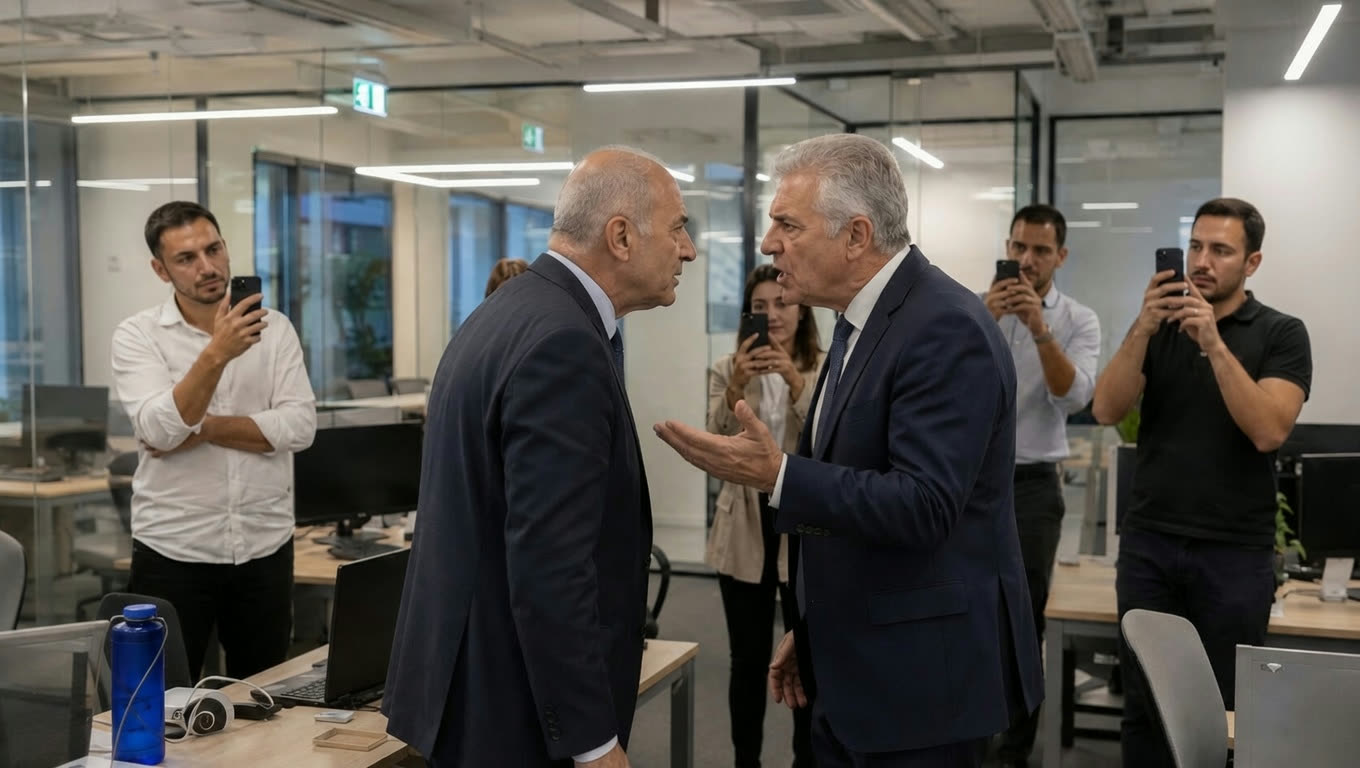
It happened in the middle of a regular workday. Two male colleagues — let's call them Alex and Marcus — had been circling the same unresolved issue for weeks: a project deadline, blurred responsibilities, and growing resentment. What started as a tense conversation near the open-plan desks quickly escalated. Voices rose. Accusations flew. Within minutes they were standing face-to-face in the middle of the office floor, chests nearly touching, words turning personal and sharp.
"You always throw me under the bus in front of the team."
"I'm done covering for your mistakes."
The rest of the office froze. Chairs stopped rolling. Conversations died. Phones came out. Colleagues filmed from their desks, from the doorway, from behind monitors. Some whispered. A few exchanged uneasy glances. No one stood up. No one said, "That's enough." No one stepped between them. The moment hung there — one shove away from becoming a physical fight — while an entire team watched through their screens.
Eventually a manager arrived and the two men were separated. The videos kept circulating in private chats long after the office went quiet again.
What really happened in that room
On the surface it looks like two adults who lost control. From a psychological perspective the scene is far more revealing.
First, we see the bystander effect operating inside a professional environment. When many people are present, individual responsibility dissolves. Everyone assumes someone else — a manager, HR, a more senior colleague — will intervene. In modern offices the effect is intensified by smartphones: recording feels like action, while actually stepping in feels risky, awkward, or politically dangerous.

Second, the conflict was never only about the deadline. Unaddressed workplace grievances do not stay polite. They accumulate, gain emotional charge, and eventually erupt in public. Perceived injustice, status threat, and chronic stress create the perfect conditions for an explosion in front of an audience.
Third, both men demonstrated a collapse of emotional regulation. Once anger and shame take over, the prefrontal cortex goes offline. Rational problem-solving disappears. The presence of watching colleagues can further inflame the need to dominate or save face, turning a disagreement into a performance of power.
The deeper problems that need solving
Situations like this rarely appear without warning. They point to several underlying issues that, left unexamined, tend to repeat:
- Unresolved workplace conflict. When feedback channels are weak or unsafe, irritation builds until it finds a public, destructive outlet.
- Low psychological safety. In environments where people fear looking weak, taking sides, or "making it worse," silence and filming become the default responses.
- Limited conflict-resolution and communication skills. Many professionals have never been taught how to stay regulated while disagreeing or how to de-escalate once emotions rise.
- Emotional regulation deficits. Difficulty recognizing and managing intense feelings (anger, humiliation, threat) makes constructive dialogue almost impossible in the heat of the moment.
- Cultural reinforcement of spectator behavior. When recording becomes more common than intervening, empathy and moral courage quietly erode — even among people who work together every day.
These are not character flaws. They are patterns and skills that can be understood and changed.
A different outcome is possible

Imagine if one of those men had noticed the physical signs of rising anger earlier and chosen to pause. Imagine if either had the tools to say, "This is getting heated — let's take this offline and continue tomorrow." Imagine if even one colleague had felt both safe and responsible enough to step in calmly. Those alternatives are not idealistic. They are learnable.
If this story feels uncomfortably familiar — tension with colleagues that keeps spilling into public view, difficulty staying calm when challenged at work, or the quiet realization that you might freeze or film instead of act — it may be time to look more closely at the patterns underneath.
Online consultations are available.
In a private, focused session we can examine the specific triggers, communication habits, and emotional responses that keep situations like this alive. You do not have to wait for the next public explosion to start changing the pattern.
Book your online consultation today and take the first step toward clearer boundaries, stronger emotional control, and healthier ways of handling conflict — both in the office and beyond.
Book your online consultation
Leave your details and we will get in touch to arrange a first online session — at a time that works for you.